
Wolf cut vs. modern mullet from the side
Choose a wolf cut for shaggy layers that connect the crown, sides, and back. Choose a modern mullet if you want the back to stand out against shorter sides. In a reference photo, look just above the ear. How much hair you want to keep there is often the deciding detail.
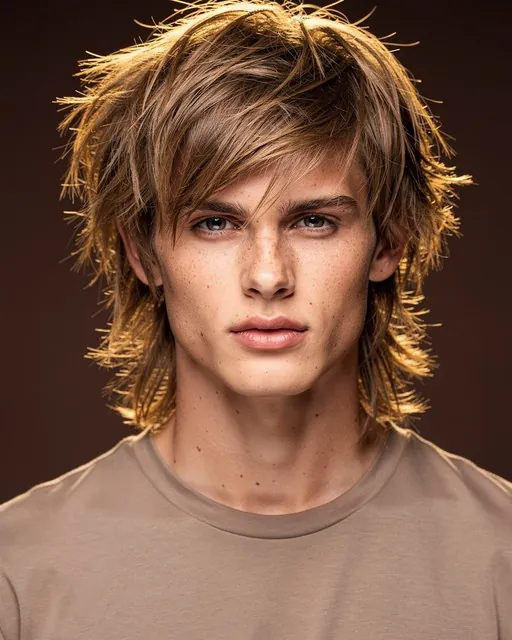
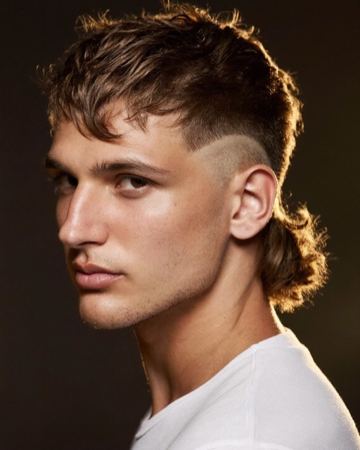
AI catalog illustrations. The turn of the head makes the mullet’s side-to-back contrast visible.
Read a side photo in three places
- Over the ear. A wolf cut can leave little wings that brush the ear and move when you turn. A mullet can open a clear gap here with scissors or a fade. Cover the ear area in the reference photo with your thumb, then uncover it. Does that opening make the cut for you?
- At the crown. Shorter wolf-cut layers can give wavy hair lift as it dries. On straight hair they may lie flatter and show as separate tiers. Ask the stylist to show where the shortest layer will fall over the layer underneath.
- At the collar. A mullet can read as a mullet even with a short tail when the sides are close. Point to where the back should finish with your head level. Tilting your chin down changes how the ends meet your collar.
What if you are between the two?
Keep the area in front of the ear scissor-cut on the first visit. You can expose more ear once you see the shape dry. Taking the sides tight on day one commits you to growing them back before a connected shag will sit the same way. If your crown is still short from a previous cut, keeping the nape alone will give you contrast while the layers grow in.
Tell your stylist which length to protect
“For the wolf cut, keep wisps over my ears and connect them into the back. I like lift at the crown. Show me where the shortest layer will sit when my hair dries.”
“For the mullet, I want my ears visible and the back to touch my collar. Keep the top textured. Let’s agree on how far the short section goes behind my ear before you clip it.”