
Italian Bob: who it suits and how to ask for it
The Italian bob falls between the jaw and the top of the neck, with a thick, slightly rounded perimeter, a deep side part and movement built into the ends rather than through short layers. It is heavier and bouncier than a French bob, blow-dried with lift at the roots so the shape looks full instead of flat.

- Best face shapes
- oval, heart and oblong
- Hair textures
- straight and wavy
- Length
- Short
- Trim every
- 5-8 weeks
- Daily styling
- about 12 min
Italian Bob at a glance
Who Italian Bob suits
Face shapes. Fullness around the jaw fills out a narrow chin on a heart shape and adds width to an oblong face. On a square face, keep the length an inch below the jaw and the part deep, or the line lands right on the jaw angle.
Hair type. Medium to thick hair gives the full, rounded look; fine hair can work with a blunter line but will need volumising mousse every day. Tight curls change the shape so much that a curly-specific bob is the better request.
How to ask for Italian Bob
Say this to your stylist
I'd like an Italian bob, about an inch below my jaw, with a deep side part and a full, slightly rounded perimeter. Please keep the weight at the ends, add only long, invisible layers inside for movement, and show me how you blow it out with a round brush for root volume.
The ask in steps
- Set the length between the jaw and the top of the neck
- Ask for a heavy, rounded perimeter with only long internal layers
- Choose a deep side part
- Ask to be shown the round-brush blowout for root volume
Keeping it looking right
Plan a trim every 5-8 weeks and about 12 min of styling a day. Mousse at the roots plus a 2-inch round brush, drying the top section up and away from the part, builds the bounce; finish with a light hold spray rather than oil, which weighs it down.
Less suited to air-dry-and-go routines; without a blowout it settles into a plainer, flatter bob.
Questions about Italian Bob
What is the difference between an Italian bob and a French bob?
A French bob is shorter, usually at the cheekbone or lip line, often with a fringe and a deliberately undone finish. An Italian bob is longer, around the jaw or just below, fuller and bouncier, and usually worn with a deep side part and no fringe. It is also easier to tuck behind the ears.
Does an Italian bob work on fine hair?
It can, but the cut should be blunter and slightly shorter so the perimeter stays dense, and you will rely on volumising mousse and a round-brush blowout for the full look. Avoid heavy internal layering, which removes the weight that makes it read as an Italian bob.
Can I see how Italian Bob looks on me before I cut?
Yes. In the SwapHair iPhone app you upload a selfie, pick Italian Bob and get an AI preview of it on your own face. It is an approximation to help you decide and to show your stylist, not a guarantee of the exact result. A few previews are free; more need a subscription.
 French Bob
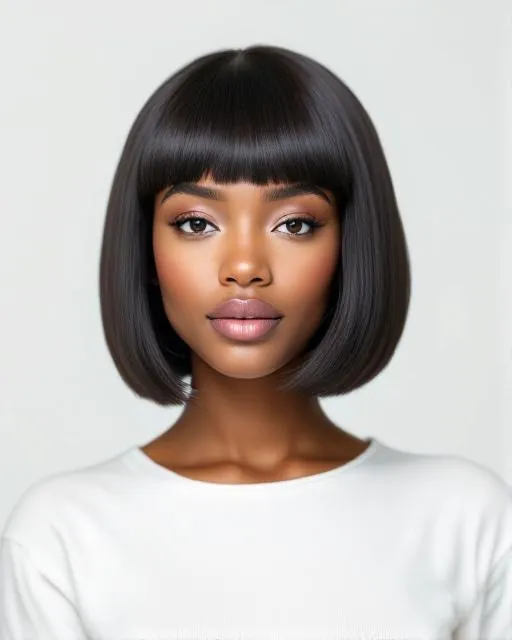 Classic Bob
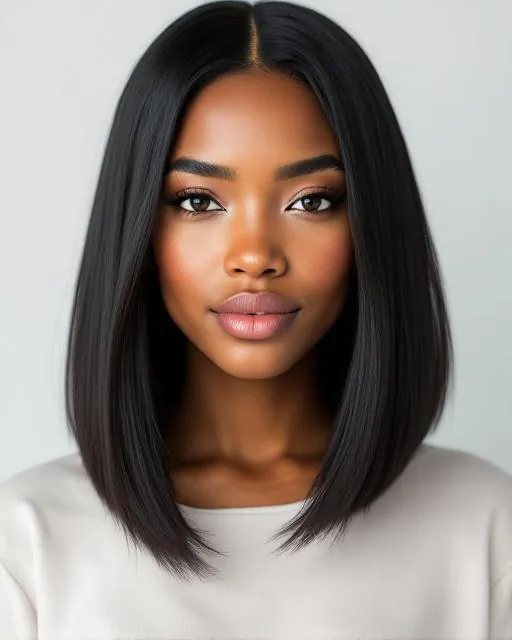 Blunt Lob