
Beard styles by face shape
A beard reshapes your jawline. Length at the chin makes a face look longer, fullness on the cheeks makes it look wider, and tight sides with a longer chin add angles. Round faces want length at the chin, long faces want fullness at the sides, and oval faces can wear almost anything.
The main beard styles
- Light stubble: a few days' growth, roughly 1 to 2 mm, kept even with a trimmer.
- Heavy (designer) stubble: about 3 to 5 mm with a tidied neckline. It reads as deliberate rather than unshaven.
- Short boxed beard: around 1 to 2 cm, sides kept shorter than the chin, with clean cheek and neck lines. The most office-friendly real beard.
- Classic goatee: hair on the chin only. Add a connected mustache and it becomes a circle beard.
- Van Dyke: a mustache plus a pointed chin beard, not connected, with clean cheeks.
- Ducktail: a full beard with shorter sides that tapers to a point below the chin.
- Full beard: grown in across the cheeks, chin and neck, usually 2 cm or longer.
- Garibaldi: a wide, full beard with a rounded bottom, traditionally worn long, up to about 20 cm.
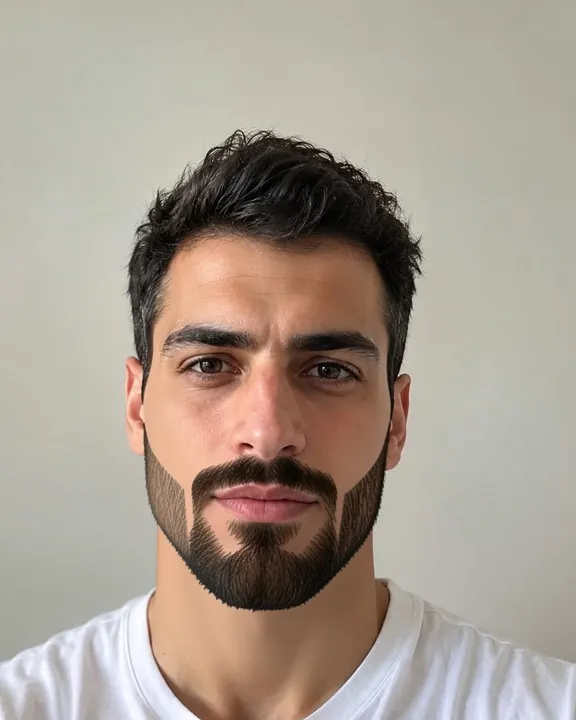
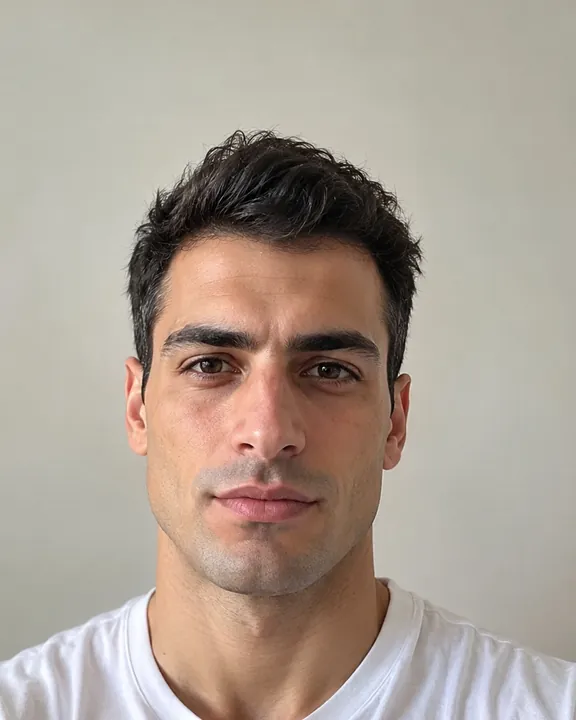
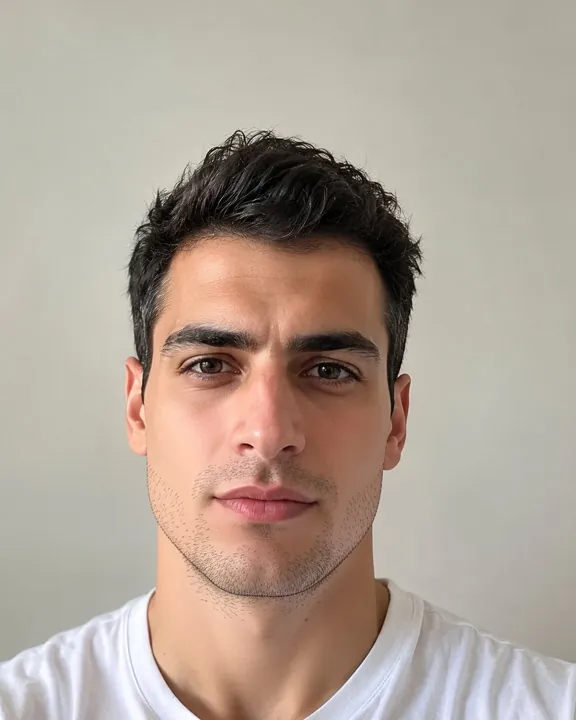
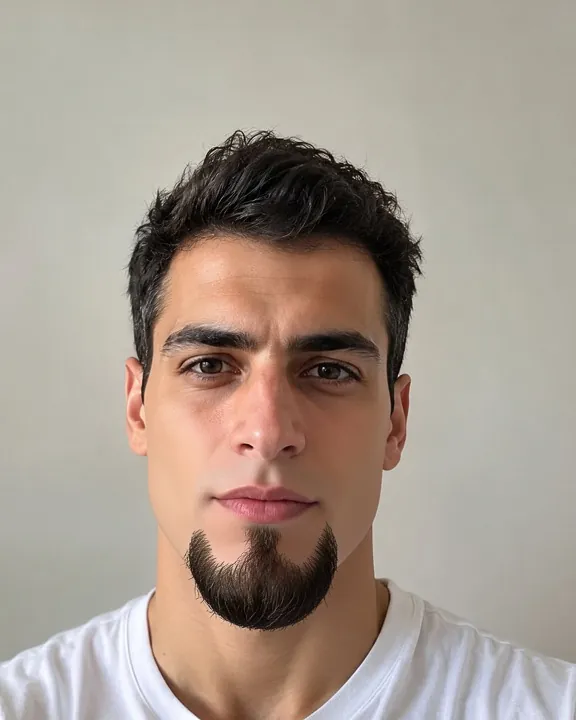
AI previews made with SwapHair from one photo of the same clean-shaven man.
Which beard for which face shape
Round
Add length and angles. Keep the cheeks short and let the chin grow: a ducktail, Van Dyke, goatee or boxed beard that's longer at the chin. A slightly angled cheek line helps. Avoid fullness on the cheeks and very round, bushy shapes.
Square
A strong jaw suits stubble and short boxed beards that follow it. To soften the corners instead, keep the beard a little rounder and fuller at the chin, like a rounded full beard or a short Garibaldi. Avoid sharp, blocky edges at the jaw corners, which make the jaw look wider.
Oblong (long)
Add width, not length. Keep the chin short and the sides fuller: a short boxed beard or a full beard trimmed flat at the bottom. Avoid goatees, ducktails and long pointed shapes, which make a long face look longer.
Oval
Balanced proportions mean almost anything works, from stubble to a full beard. Choose by how much maintenance you want and how your beard grows.
Heart
A wide forehead and narrow chin benefit from bulk on the lower face. A full beard, short boxed beard or Garibaldi adds width at the jaw. Very thin chin-only styles can make the chin look narrower.
Diamond
Wide cheekbones with a narrow chin. Fill out the chin and keep the cheeks tidy and lower: a goatee, Van Dyke, or a full beard with the cheek line trimmed. Avoid extra width at cheekbone height.
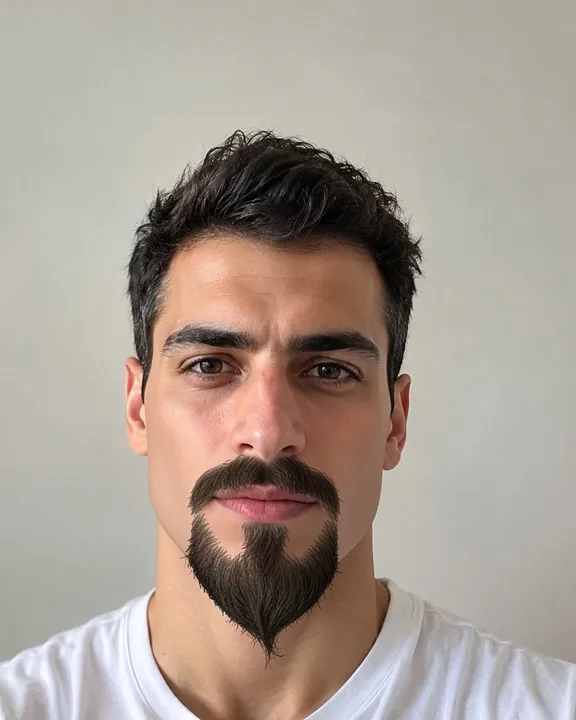
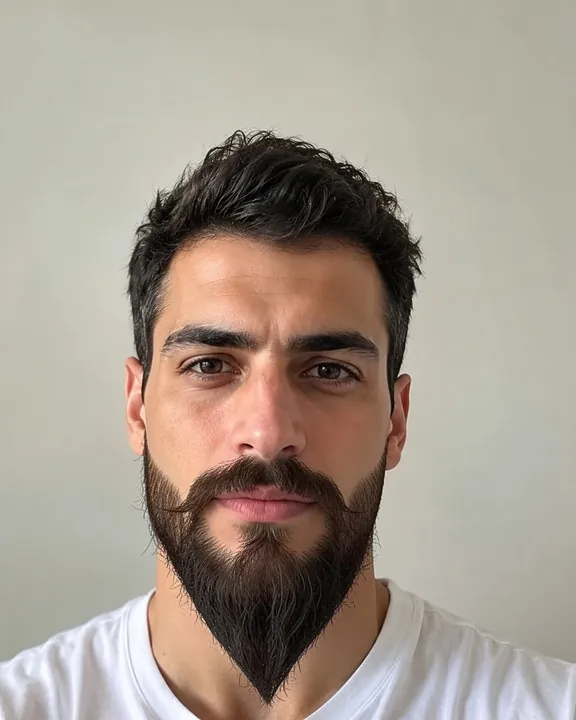
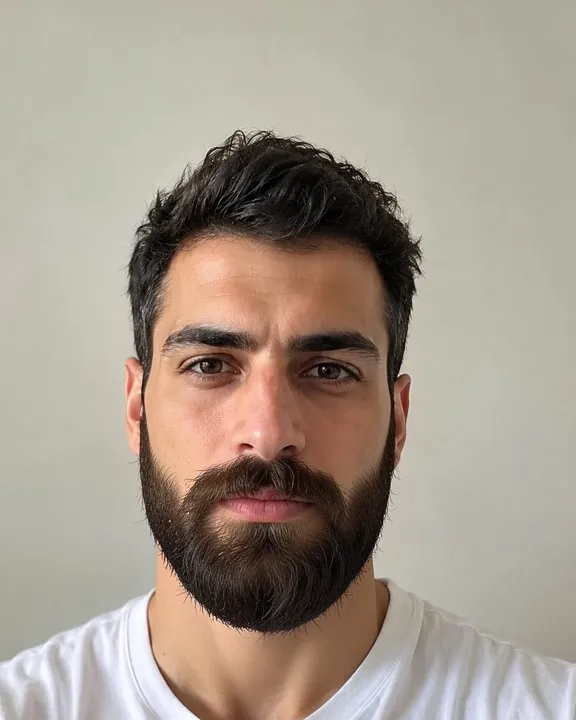
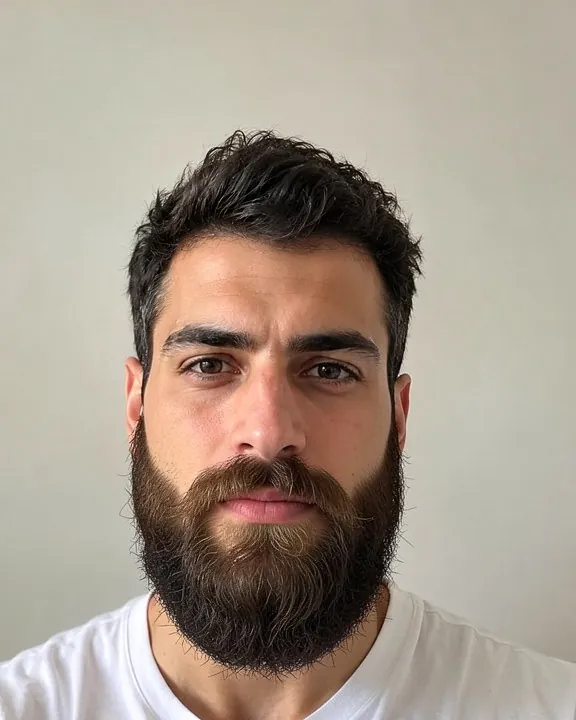
AI previews made with SwapHair from one photo of the same clean-shaven man.
Shaping rules that suit every face
- Neckline: about one to two finger-widths above the Adam's apple, curving back to just behind the ears. Too high looks like a double chin; too low looks unkempt.
- Cheek line: follow your natural line or drop it slightly. Shaving it too low makes a beard look thin and the face wider.
- Mustache: trim it so it doesn't cover the top lip, unless you're growing a deliberate long mustache.
- Sideburns: blend them into the haircut. A barber can fade from the haircut into the beard so there's no hard line.
If your beard grows patchy
Beard density is mostly genetic, and many beards look patchier at two weeks than they do at six. Give it four to six weeks before judging, then shape it. If gaps remain, heavy stubble or a short boxed beard hides them far better than a long beard, where gaps show at the cheeks. Goatees and Van Dykes are good options when the chin grows thicker than the cheeks.
Try before you grow
Growing a full beard takes weeks; shaving one off takes minutes. Previewing a few styles on your own face first tells you which one is worth the wait.
FAQ
What beard suits a round face?
Styles that add length at the chin and keep the cheeks short: a ducktail, Van Dyke, goatee, or a boxed beard left longer at the chin. Avoid full, rounded cheeks.
What beard is best for a long face?
Keep the chin short and the sides fuller, for example a short boxed beard or a full beard trimmed flat at the bottom. Goatees and pointed beards make a long face look longer.
Which beard style hides a patchy beard?
Heavy stubble or a short boxed beard, where short, even length hides gaps. If your chin grows thicker than your cheeks, a goatee or Van Dyke uses the strongest area.
How long should I grow my beard before shaping it?
About four to six weeks for a full beard. Shaping too early cuts the lines before you know where the beard fills in. Keep the neckline tidy in the meantime.
Where should my beard neckline be?
Roughly one to two finger-widths above the Adam's apple, curving up to just behind the ears. That keeps the jaw defined without shaving the beard too high.
What's the difference between a goatee and a Van Dyke?
A classic goatee is hair on the chin only. A Van Dyke adds a mustache that isn't connected to the chin beard, which is usually trimmed to a point.