
How to ask your barber for the haircut you want
Give your barber five things: the cut's name with a photo, the sides (a guard number or fade height), the top (length in inches or how much to take off), the neckline (blocked, rounded or tapered) and how you style it day to day. Numbers beat adjectives: "short" means something different to everyone.
The 30-second script
- Name and photo. "I'd like a textured crop, like this."
- Sides. "Mid fade down to skin" or "number 3 on the sides, tapered at the neck."
- Top. "Leave about two inches" or "take an inch off, keep the length at the front."
- Neckline. "Tapered neckline" (see below).
- Styling. "I air-dry it and use a bit of clay," so the barber cuts for how you'll actually wear it.
Then add anything they can't see: a cowlick at the crown, a scar, a job that needs it tidy, or what went wrong last time.
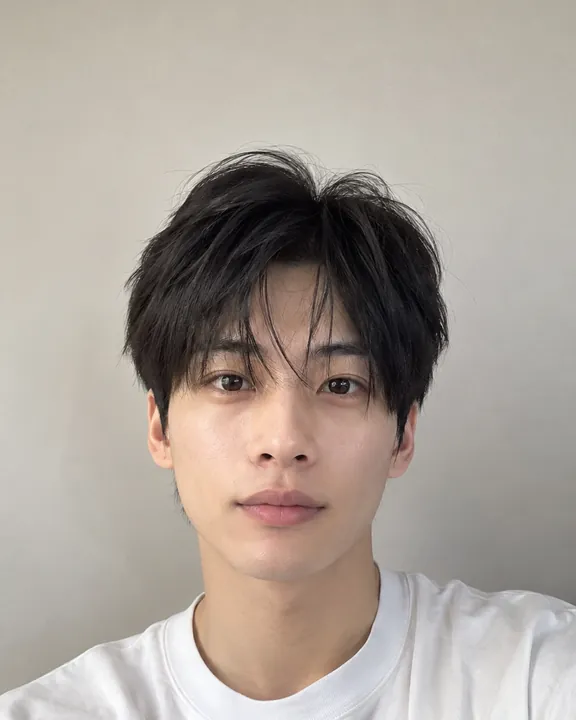
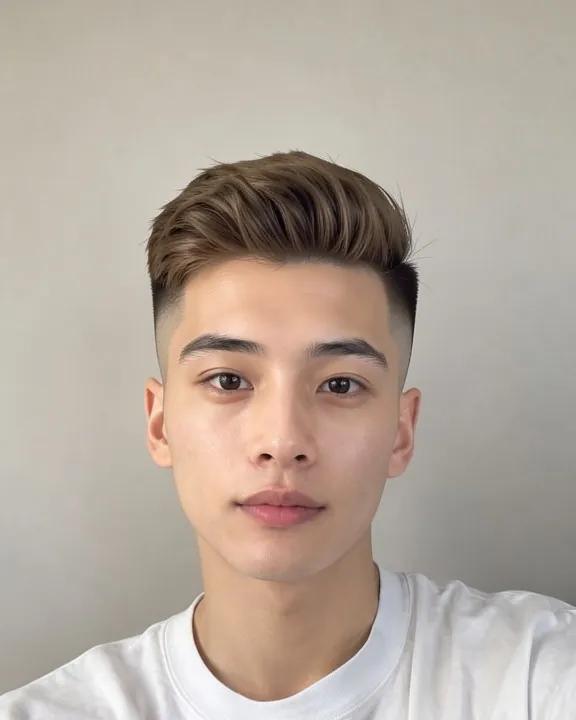
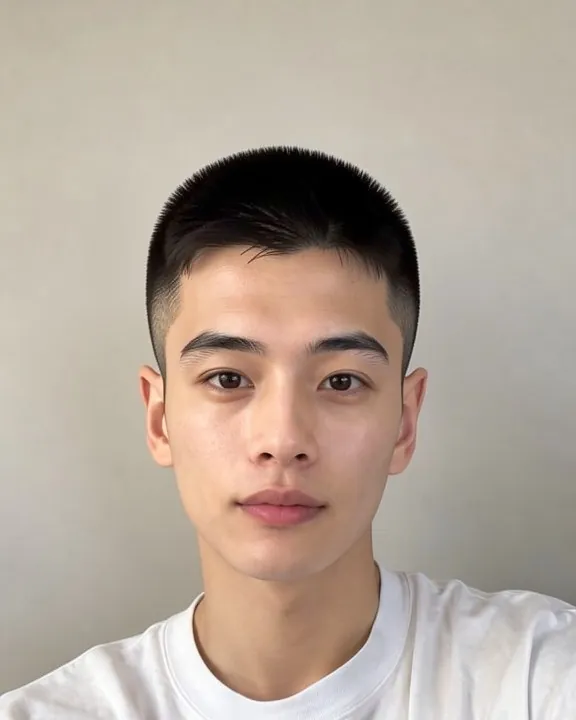
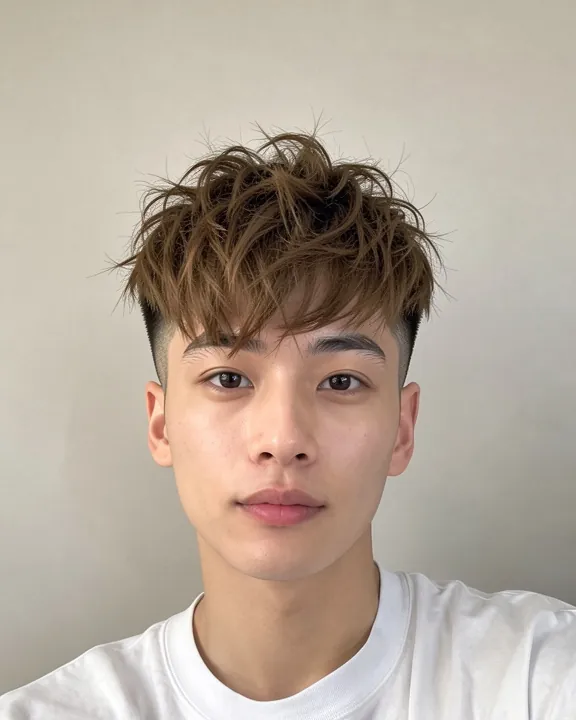
AI previews made with SwapHair from one photo of the same man. Captions show the kind of instruction that gets each cut.
Clipper guard numbers
| Guard | Inches | Millimeters | Looks like |
|---|---|---|---|
| 0 (no guard) | 1/32 to 1/16 | about 1 to 1.5 | Very close, scalp clearly visible |
| ½ | 1/16 | 1.5 | Bottom of most fades |
| 1 | 1/8 | 3 | Short buzz, scalp shows |
| 2 | 1/4 | 6 | Classic short sides |
| 3 | 3/8 | 10 | Short but no scalp showing |
| 4 | 1/2 | 13 | Longer clipper cut |
| 5 / 6 | 5/8 / 3/4 | 16 / 19 | Soft sides |
| 8 | 1 | 25 | Longest standard guard |
These are the common sizes; brands differ slightly. Barbers blend half-steps by opening the clipper lever, so "a 2 blended into a 3" is a normal request. On light or fine hair everything looks shorter, so go up a number if you're unsure.
Words barbers use
- Taper: short only at the sideburns and neckline. The subtlest option.
- Low / mid / high fade: where the shortest part stops: above the ear, at the temple, or near the corner of the head. Our fade guide compares them.
- Skin or bald fade: taken down to the skin with a shaver.
- Scissor cut / clipper-over-comb: how the length is removed. Scissors leave a softer, longer finish on the sides.
- Texturize / point cut: cutting into the ends so the top looks piecey instead of blunt.
- Line-up (shape-up, edge-up): crisp lines at the forehead and temples. Say "follow my natural hairline" so it doesn't get pushed back.
Necklines and sideburns
Blocked necklines are cut square: sharp on day one, but regrowth shows fastest. Rounded softens the corners. Tapered fades into the neck and grows out most naturally. For sideburns, say where they should end (middle or top of the ear) and whether they should be faded. If you have a beard, ask for the sideburns to blend into it.
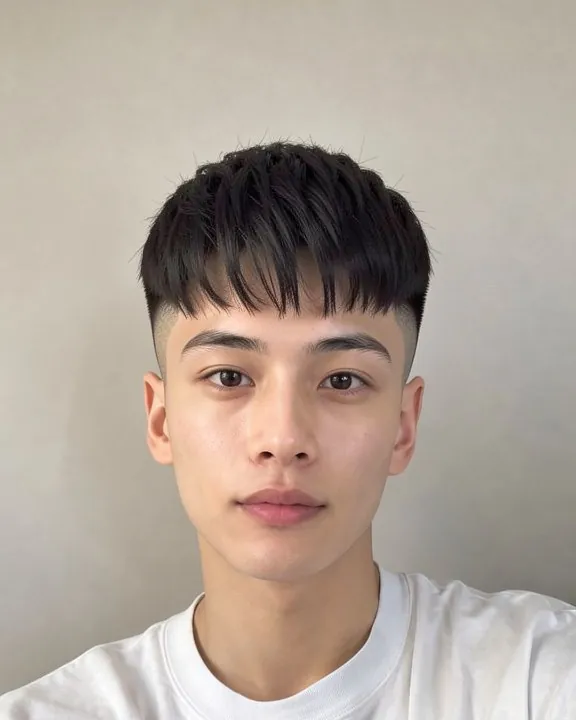
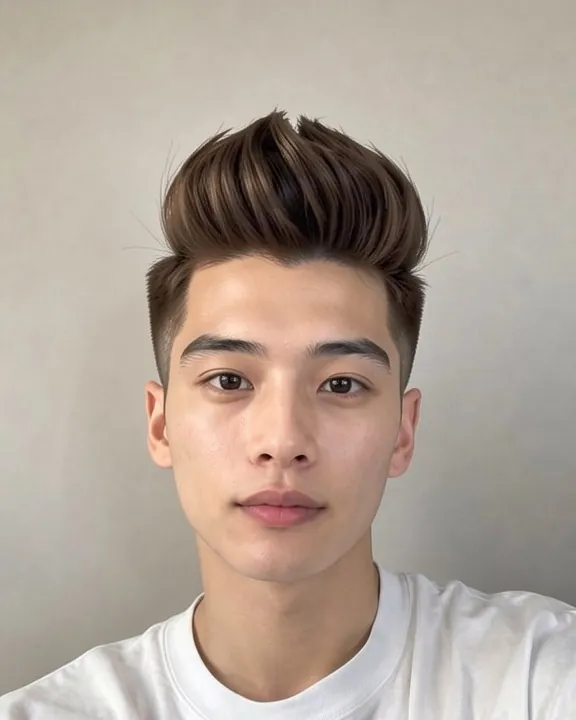
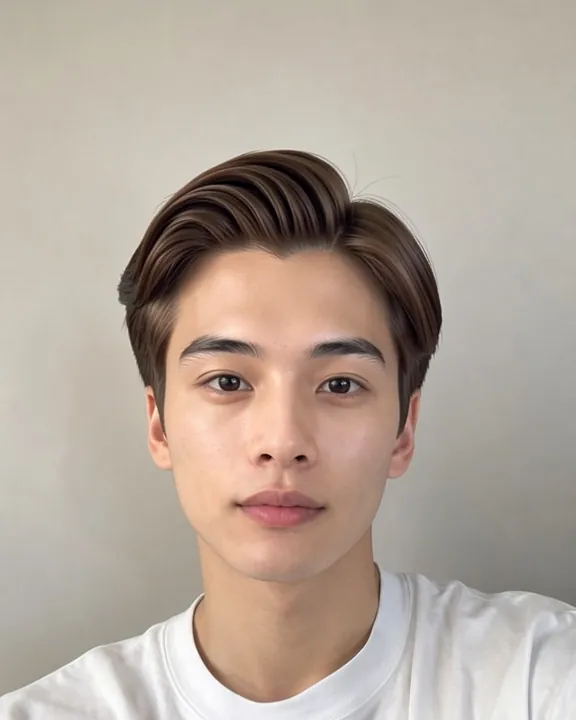
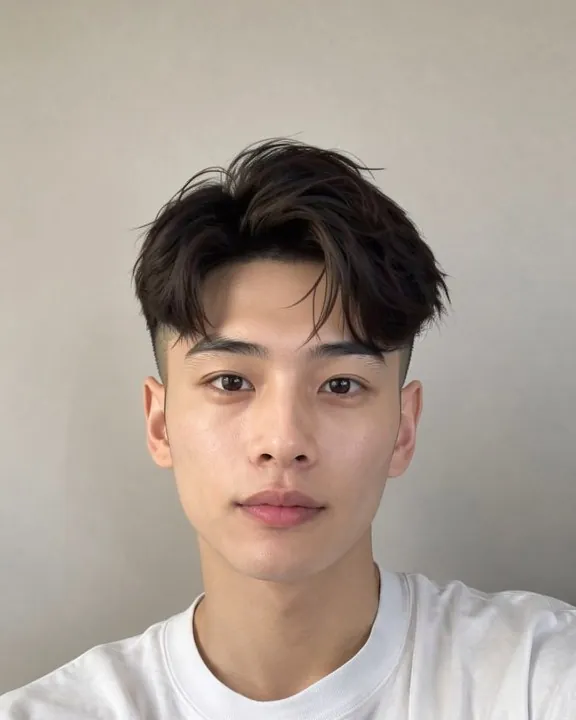
AI previews made with SwapHair from one photo of the same man. Captions show the kind of instruction that gets each cut.
Why the photo should be of you
A celebrity photo shows that person's hair density, texture, hairline and head shape, and often a stylist and a lighting crew too. The best references are of someone with hair like yours, from the front, side and back. Better still is the cut previewed on your own face: it shows the barber what you're picturing on your proportions and helps you rule out cuts before anyone picks up the clippers. Treat an AI preview as a conversation starter, not a blueprint: bring side and back references too.
Phrases that cause bad haircuts
- "Just a trim." Say how much: "half an inch off everywhere, keep the shape."
- "Short on the sides." Give a number or fade height.
- "Clean it up." Clean means a line-up to some barbers and a full fade to others.
- Silence. If the first pass looks shorter than you wanted, say so early. Hair can't be put back.
FAQ
What number should I ask for on the sides?
A number 2 (1/4 inch, 6 mm) is the classic short side. Go to a 3 or 4 if you don't want scalp to show, or a 1 for a very short look. If you're unsure, start longer: it's easy to go shorter.
What does a number 2 haircut look like?
Hair about 6 mm (1/4 inch) long, short and even, with a little scalp visible on lighter or finer hair. All over it's a short buzz cut; on the sides it's a standard short back and sides.
What's the difference between a taper and a fade?
A taper only shortens the sideburns and neckline. A fade carries the short length up the sides and back, often down to skin. A taper is subtler and grows out more gradually.
Is it OK to bring a photo to the barber?
Yes, barbers prefer it. Bring a front, side and back view if you can, ideally of someone with hair like yours or a preview of the cut on your own face, and still describe lengths in numbers.
How do I ask for just a trim?
Say how much to take off and what to keep: "half an inch off all over, keep the same shape and the length at the front." Also mention whether the neckline and sideburns need tidying.
How often should I get a haircut?
Skin fades look sharpest when touched up every two to three weeks. Tapers and scissor cuts usually go four to six weeks. Longer styles can go six to ten weeks between trims.